Escarpment Door Specialists
Issue 2 of 3Garage DoorsHamilton, Ontario
Garage Door Opener Diagnosis and Repair: what to note first
You press the remote from the driveway and hear the motor hum overhead, a steady drone with no movement behind it.
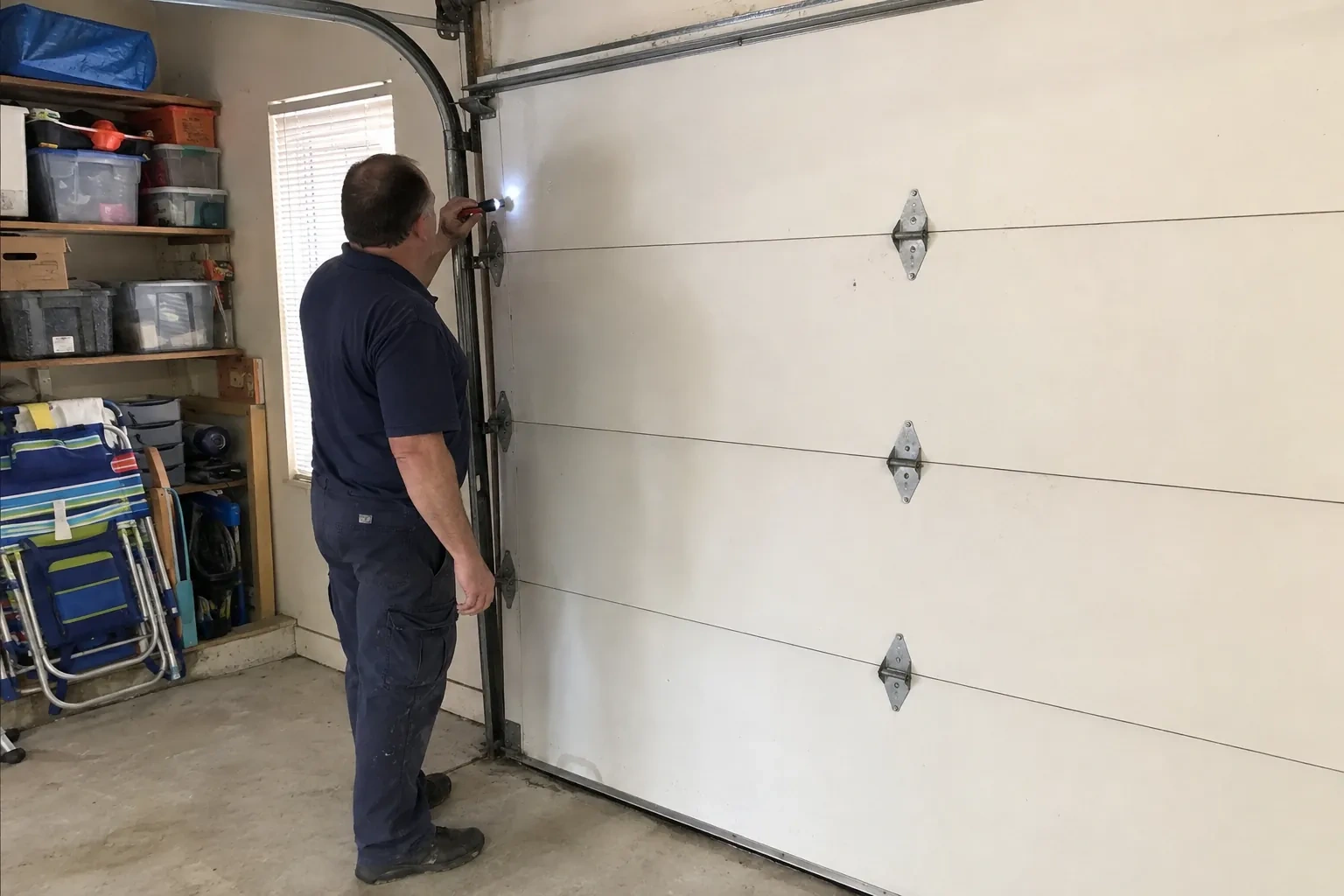
You press the remote from the driveway and hear the motor hum overhead, a steady drone with no movement behind it. The door stays shut. Press again and the hum returns, then quits, as if the machine is trying and cannot get a grip on anything.
Worth answering before the call
Is the garage connected to the house, or does it have a side door? How does the door feel when lifted by hand: light, heavy, or does it drift? Are the two small lights on the sensors near the floor steady, flickering or off?
Should I lubricate the chain, the rail or the track?
Rollers, hinges, bearings and springs benefit from a garage door lubricant once or twice a year. The chain, belt or screw-drive rail is a separate question, since each drive type calls for its own product and schedule from the opener's manual rather than one rule for every unit. The track itself should stay clean and dry, because lubricant there collects grit and makes rollers slide instead of turning. The technician can point out the spots on your door at the end of the visit.
There are white plastic shavings under the opener. What are they?
Teeth from the drive gear. Many chain-drive openers use a nylon gear between the motor and the sprocket, and after years of running, especially against a heavy or dry door, its teeth shear off and fall as fine white curls onto whatever is parked below. The motor then spins without moving the chain. The gear and sprocket are replaced as a kit, and the door balance is checked so the new gear is not asked to carry the same load.