Springs · Hamilton
Garage Door Cable Replacement in Hamilton
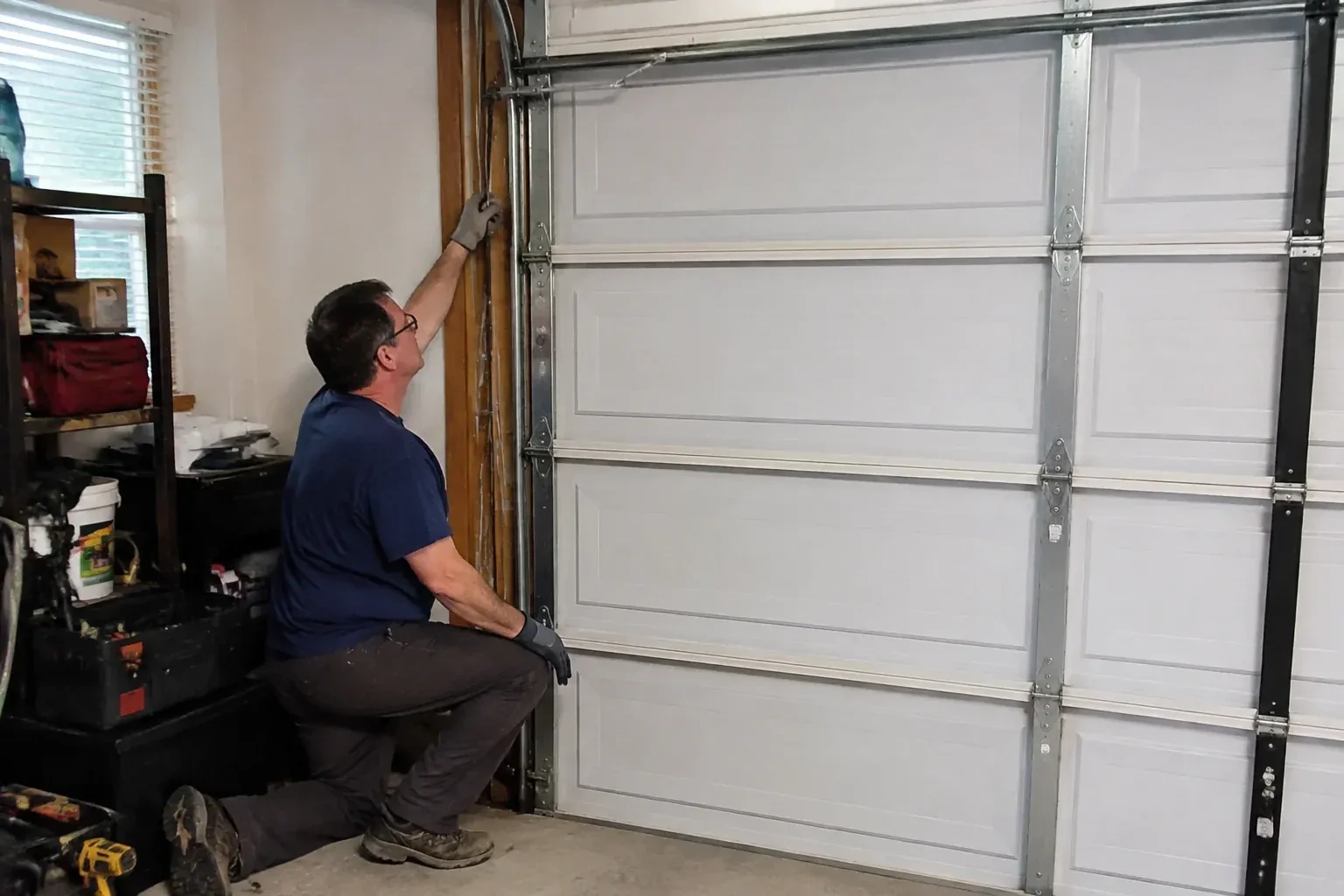
Your older door has springs along the tracks, and one cable has slipped off its pulley and dangles slack. The door lifts crooked and needs a shoulder to close, when it used to glide.
Garage Door Cable Replacement
In plain words
A cable visit runs in a set order. First the opener is disconnected and the door clamped so nothing can move. Then the counterbalance is unloaded so the drums, cables and bottom brackets can be handled calmly. The old cables come off, the drums and brackets are inspected, and new cables of the correct specification go on. Both sides are tensioned evenly until the door sits level, then the springs are wound back to the turns the door height calls for. Finally the door is balanced by hand, the opener reconnected and its travel and reversing checked. You are shown the finished door working before the technician leaves.
How the visit goesAfter years of slushy winters the cables look thinner near the bottom brackets, with rust streaks running down the door where they attach. The door still works, but the frayed wires catch your glove when you brush past.
Hamilton
How the visit goes
Torsion or extension, and which lift
The technician identifies the counterbalance before choosing parts. A shaft with drums above the header means a torsion system; springs stretched beside the horizontal tracks with pulleys mean extension. Then the lift type: standard lift on most attached garages, low headroom hardware where the ceiling is tight, and high lift where the door climbs well above the opening before turning. Each uses a different drum profile and a different cable length, and a double door of the same height may need a heavier cable than a single. Reading these details correctly is what makes the replacement cable wind evenly on the drum instead of overlapping.
Winding the springs back on
The torsion springs are wound back up with the winding bars, a quarter turn at a time, to the number of turns the door height calls for, which is roughly one full turn for each foot of door plus a small allowance the technician judges from the balance test. The cone set screws are tightened to the shaft, the bars are removed, and the clamps come off. The cables are watched as the door is raised to make sure each wraps onto its drum in a single neat layer with no overlap and pays out cleanly on the way down. A quarter turn added or removed fine-tunes the balance.
Checking the balance yourself, safely
You can confirm the door is still balanced any time without touching a spring or cable. With the door closed, pull the opener's release cord so the trolley disconnects, then lift the door by its handle or a safe gripping point to about waist height and let go gently. A balanced door should not lift or fall far on its own; a little slow drift is normal, and what calls for a technician is rapid movement, a heavy feel, binding in the track, or a result outside the manufacturer's balance instructions, not drift alone. Reconnect the opener as the manual describes, usually by running it once. Doing this each season catches wear early and keeps the opener working lightly.
Garage Door Cable Replacement
In the van
- Track clamps or locking pliers
- Bottom brackets with cable pin
- Containment cables
- Galvanized aircraft-type lift cables
- Extension-spring pulleys and sheave forks
What affects the quote
Same fees day, night or weekend
1Springs found weak or broken
If the inspection shows a spring that is broken, stretched or wound short, replacing it is explained and priced separately from the cable work, and the two are done in one visit if you agree.
2Door height and lift type
Cable length follows the door height and whether the hardware is standard lift, low headroom or high lift. Taller doors and high-lift conversions take longer cables and specific drums.
3Extension-spring pulleys and containment cables
On an extension door, pulleys with grooved wheels or seized bearings are replaced with the cable, and a containment cable is added where one is missing. Each is a small parts line.
Garage Door Cable Replacement: questions
What are garage door cables made of?
They are galvanized aircraft-type wire rope: many fine steel wires twisted into strands, and the strands laid around a core, which gives a cable that bends around a small drum thousands of times without fatiguing. One end carries a swaged stop or a loop for the drum, the other a loop that fits over the bottom bracket pin. Diameter and length are chosen for the door's weight and height.
How long do lift cables usually last?
Cables tend to live about as long as the springs they work with, often ten years or more on a door used a few times a day, and less on a door that sees heavy use or a wet, salty floor every winter. Rather than a calendar, watch the condition: fraying, rust near the loop or a slack side are the signs the set is due.
Can a cable be too long or too short for the door?
Yes, and both cause trouble. A cable that is too long runs out of drum groove and starts a second layer over the first, which wears it and throws the balance off near the top of travel. A cable that is too short leaves the door hanging out of level or the drum without a secure wrap. The correct length comes from the door height, the drum and the lift type, so the technician measures rather than guesses.
Springs & Hardware
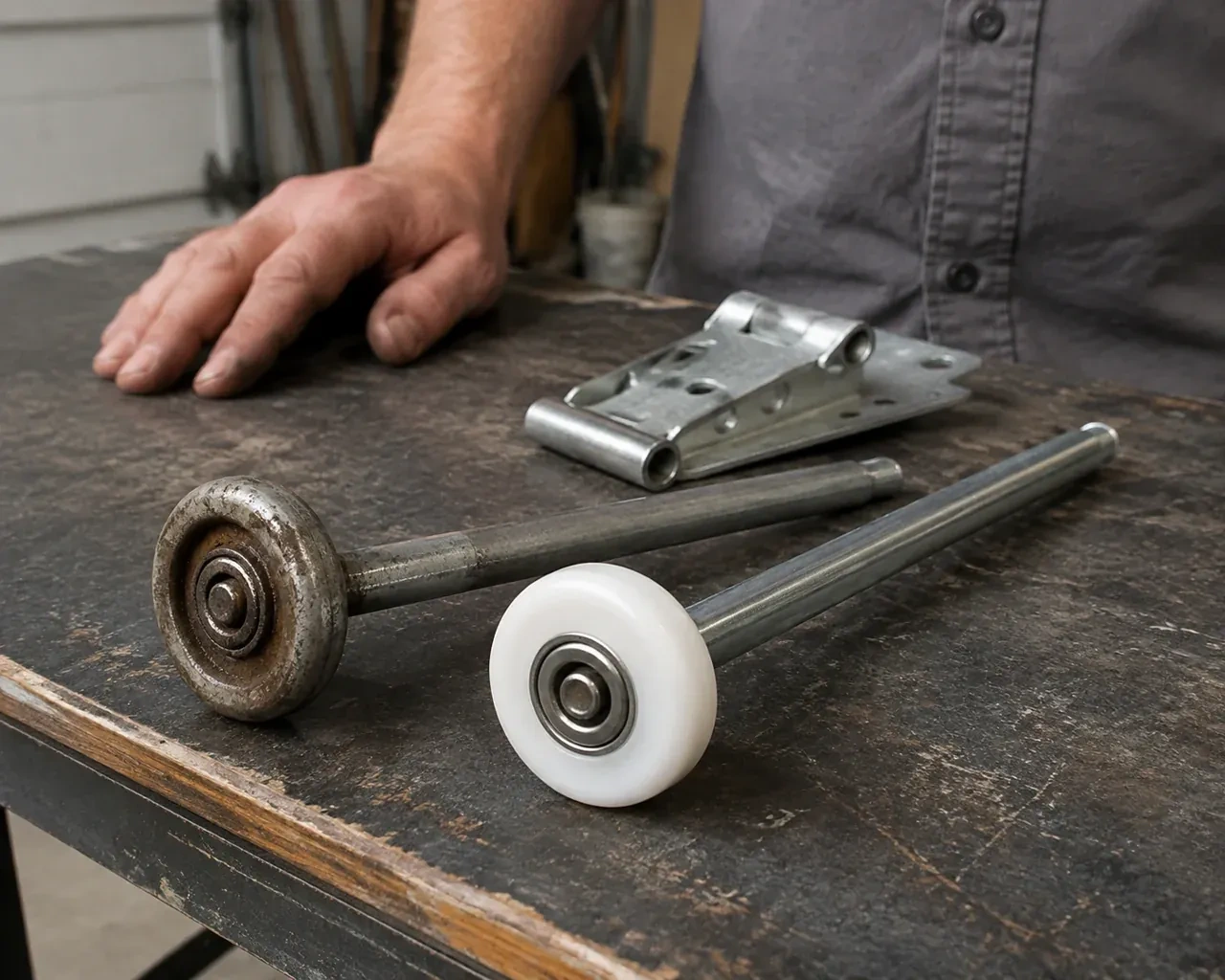
- Garage Door Hinge ReplacementThe car nudged the door on the way in.
- Garage Door Track Repair or ReplacementThe garage floor has settled at one corner, and the door now scrapes the concrete on that side…
- Torsion Spring ReplacementOne side of the door sits higher than the other in the tracks, and a lift cable is hanging slack or…
Garage Door Cable Replacement near you
Broken spring, snapped cable, door off the track, opener humming but not lifting, remote lost, seal cracked, panel dented, door too loud for the bedroom above: those are the calls we take from Hamilton, and each has its own service page explaining how we handle it.