Openers · Hamilton
Belt-Drive Opener Repair in Hamilton
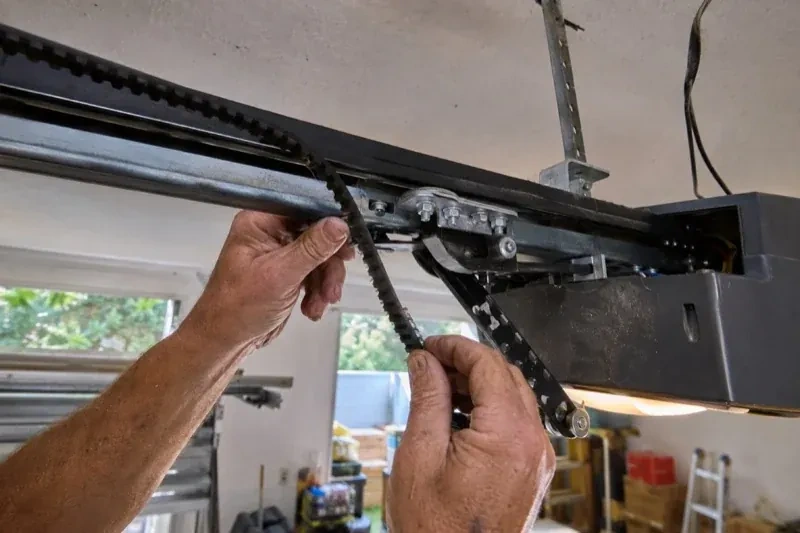
The belt looks fine from a distance, but up close the rubber has cracked across the back in dozens of places and, in one spot, you can see the steel cords showing through.
Belt-Drive Opener Repair
In plain words
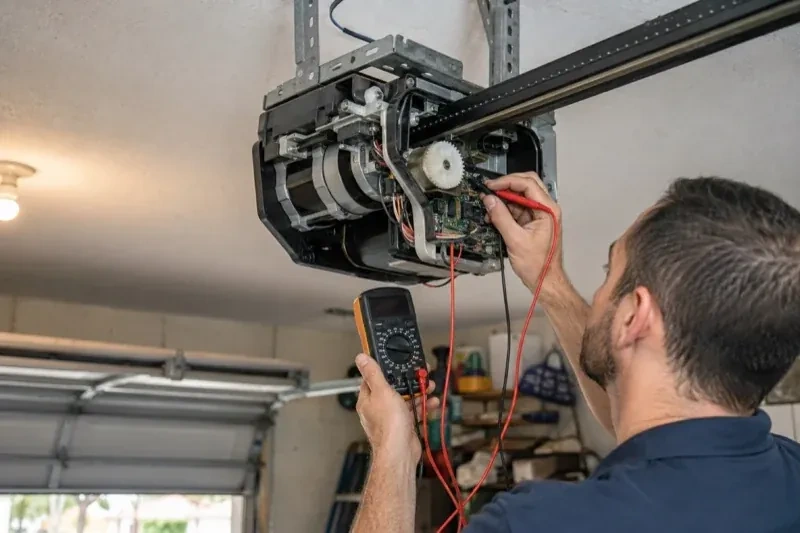
A belt drive is chosen for its quiet, so one that has started to rattle is saying something specific. Sprocket noise usually means the belt is either too loose or too tight. A squeal from the front of the rail points to the idler pulley bearing. A clack at the same point in every cycle is a run of worn teeth or a rail joint out of line. A hum with no movement is a broken clip, a stripped gear or a belt off its sprocket. Repair means reading those sounds, confirming them by inspection and replacing the one component responsible, so the operator returns to its hush.
How the visit goesAfter the power came back you pulled the red cord to get the car out. Since reconnecting, the door stops short of the floor, and no amount of turning the limit adjustment brings it the rest of the way down.
Hamilton
How the visit goes
Balance first, belt second
Nothing on the belt drive is judged until the door has been lifted by hand. The technician unplugs the operator, pulls the red cord to free the trolley and raises the door: it should rise with moderate effort, stay put about a metre off the floor and settle gently at the top. A belt is designed to guide a balanced door, not to lift a heavy one, so a door that sags or drops is loading the belt, trolley and sprocket far beyond their design. That is spring work, agreed as its own item before any belt is replaced, otherwise a new belt would simply wear out the way the old one did.
Relearning travel and force, then proving them
With the drive rebuilt and the door reconnected, the operator is taught its door again. Newer units run a learn cycle that records the full travel and the effort the door needs; older ones have limit screws and force dials set by hand. The close limit is set so the bottom seal meets the floor without the belt straining, and the open limit so the top section stops short of the header. Then the tests: a 2x4 laid flat under the door must send it back up on contact, and an object passed through the photo-eye beam must reverse it while closing. Any hesitation is adjusted and the tests are run again.
The red cord, and what to do after you pull it
You now know where the release handle hangs and what happens when you use it. A pull parts the trolley so the door can be lifted by hand through a power cut; running the motor, or a second pull, reconnects it. What matters after this repair is to pull it only with the door closed. Releasing a door that is open, or one whose springs are tired, can let it fall because the spring no longer carries its weight; the release itself disconnects the trolley from the belt, so the falling door lands on its tracks and hinges, not the belt the technician just corrected. Practise it once with the door down so the first real use is calm.
Belt-Drive Opener Repair
In the van
- Inner and outer trolley
- 2x4 offcut for the reversal test
- Door arm and clevis pins
- Idler pulley and bearing
- Drive gear and sprocket kit
What affects the quote
Same fees day, night or weekend
1Door size and weight
A wide double door or a heavy insulated one asks more of the belt and trolley, and the inspection may point to a suitably rated opener or a top-section strut for that door, alongside the belt matched to the rail and sprocket.
2Gear and sprocket kit
Shavings on the motor head mean the drive gear is stripping. Replacing the gear-and-sprocket set means opening the head unit, which is more time and a more substantial part than belt work alone.
3Adjustment or replacement
A tension adjustment with the safety tests is the smallest visit. A new belt, with a fresh clip, phasing and relearned limits, is a larger one, and the inspection decides which you need.
Belt-Drive Opener Repair: questions
Will the safety sensors be tested as part of the repair?
Yes, every time. After the drive work and the relearning of travel and force, the technician runs the door onto a 2x4 laid flat on the floor to confirm it reverses on contact, and passes an object through the photo-eye beam while it closes to confirm it reverses again. The sensors' height and alignment are checked, and the tests are shown to you so you can repeat them monthly.
What does out of phase mean, and why does my door stop short?
When the belt has been off the sprocket, or the motor has run without it, the motor's idea of where the door is no longer matches where the trolley sits. The door then stops short at one end however the limits are turned. The technician lifts the belt off, runs the sprocket to its closed position, refits the belt with the trolley at the closed end and relearns the limits.
What are the signs a belt is wearing out?
Cracks across the back of the rubber, a shiny glazed surface, a fuzzy or frayed edge, teeth worn flat or torn away in a stretch, and cords showing through the rubber. The clip at the trolley can also go brittle and snap. Most belts show one of these long before they fail, which is why a glance along the rail every few months catches a repair early.
Openers & Access
Belt-Drive Opener Repair near you
Broken spring, snapped cable, door off the track, opener humming but not lifting, remote lost, seal cracked, panel dented, door too loud for the bedroom above: those are the calls we take from Hamilton, and each has its own service page explaining how we handle it.