New Doors · Hamilton
High-Lift Garage Door Conversion in Hamilton
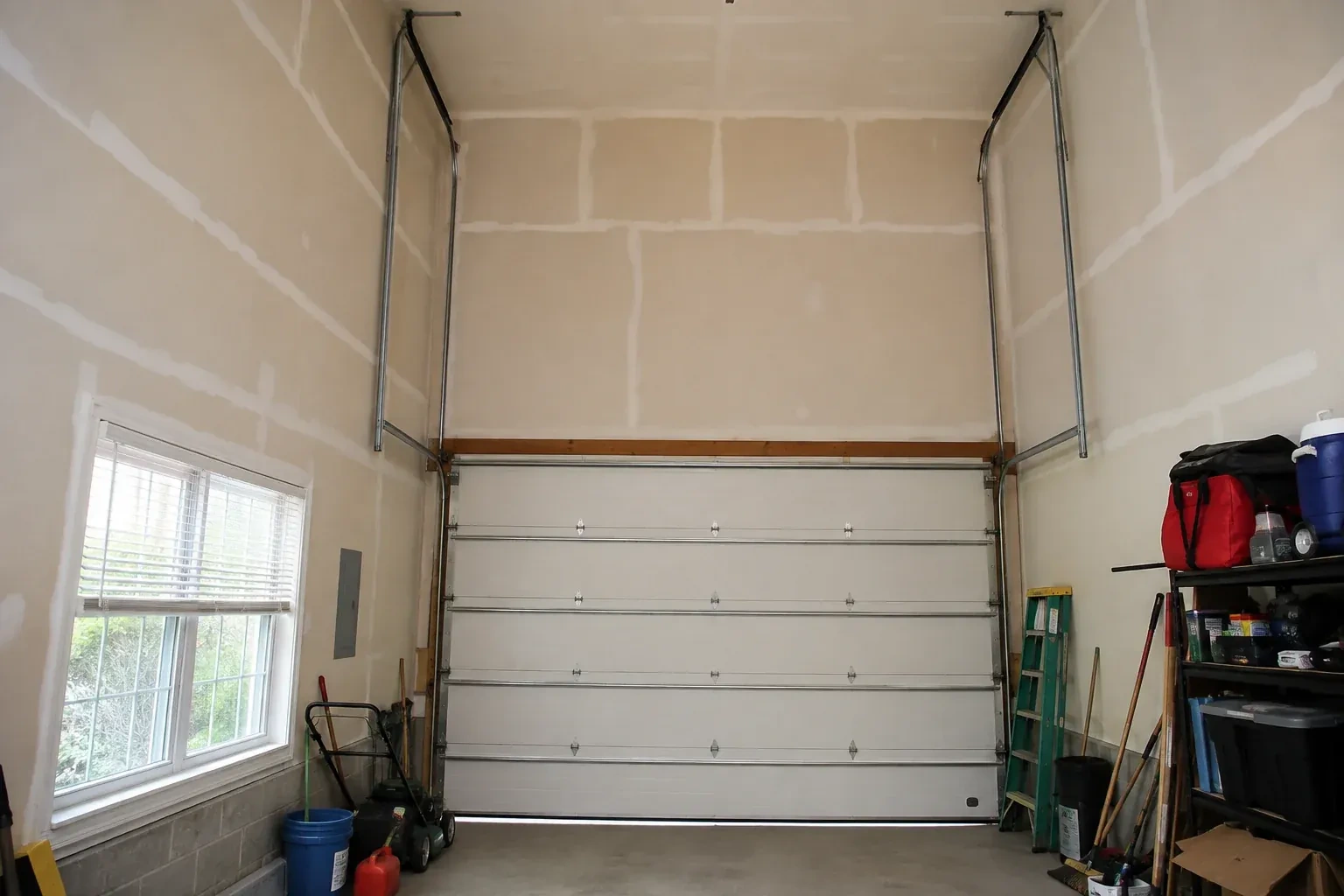
You want to keep the sectional door, but its standard track layout conflicts with a renovation above the parking bay. There is visible room over the opening for the door to climb before it needs to turn inward.
High-Lift Garage Door Conversion
In plain words
High lift sits between standard lift and full vertical lift. The door first travels upward along extended vertical tracks, then follows a curved transition and finishes horizontally. That makes it useful where the ceiling is higher than the opening but there is still room behind the door for horizontal panels. The available dimension is shaped by ceiling obstructions, spring and shaft space, track radius, door height and service access. A site assessment turns those limits into a practical clearance figure before parts are specified.
How the visit goesA taller van clears the closed opening comfortably, then loses useful space when the door is raised because the bottom section hangs below the ceiling. The issue is the open position rather than the doorway height.
Hamilton
How the visit goes
Identify and assess the existing door
The door itself is documented before reuse is discussed. Its width, height, construction, section thickness, reinforcement and actual weight influence every counterbalance choice. Hinges, rollers, end stiles and top fixtures are checked for condition and suitability through a higher transition. Labels or original paperwork can help identify the system, while field measurements confirm what is installed now. This review establishes which door components remain useful and which related hardware belongs in the conversion scope, giving the new layout a dependable starting point.
Build the extended vertical path
New vertical track is positioned plumb on both sides of the opening and spaced for smooth roller travel. The track rises to the calculated high-lift point, where matched transition sections guide the top panel toward the ceiling. Jamb brackets, flag brackets and reinforcing angles are placed according to the layout and suitable attachment points. Technicians compare both sides as they work so elevations, spacing and curves remain symmetrical. Accurate track geometry gives the sections a clean route and provides the foundation for cable and spring setup.
Simple signs that invite a service check
The handover gives you a reference for normal operation: level travel, consistent cable winding, rollers centred in track and a smooth transition from vertical to horizontal. Arrange a check if the door begins leaning, a cable looks slack or frayed, a roller approaches a track edge, or the operator repeatedly changes sound. Leaving the door in a stable position and keeping the area clear supports an orderly visit. Early observation helps a technician focus on the changed component while the documented conversion remains easy to trace.
High-Lift Garage Door Conversion
In the van
- Compatible operator hardware
- Centre bearing support
- Calculated torsion springs
- Transition track sections
- Braced back hangs
What affects the quote
Same fees day, night or weekend
1Framing and attachment readiness
Clear, suitable support points simplify installation; missing blocking, concealed conditions or structural questions create preparatory work and coordination outside the basic hardware change.
2Condition of reusable sections
Sound panels and hardware may remain in service, while worn hinges, rollers, top fixtures or damaged reinforcement add related work to the conversion.
3Finished opening dimensions
Door width and height establish the scale of track, shaft, cable and support work, while the opening geometry also affects access and installation handling.
High-Lift Garage Door Conversion: questions
How should I care for the converted tracks?
Keep the track path clear and visually check that brackets remain secure, rollers stay centred and cables wind neatly. Clean debris from accessible areas, but avoid applying grease inside the track unless the door instructions specifically call for it. Lubricate only the points and products identified for the installed system. Loaded spring, cable and bracket adjustments belong in a technician's service scope.
How is high lift different from full vertical lift?
A high-lift door eventually turns and rests in horizontal tracks near the ceiling. A full vertical-lift door continues upward along the wall and has no horizontal storage run. Wall height, ceiling depth, door height and the intended open position determine which geometry suits the building. The component layouts are distinct, so the terms matter during design.
Which parts are commonly replaced in a conversion?
Typical system changes include vertical and transition track, raised horizontal track supports, high-lift drums, longer lift cables, calculated torsion springs and related shaft or bearing hardware. Top fixtures, rollers, brackets and the operator arrangement may also change according to the design. The final list follows measured compatibility rather than a universal kit applied to every door.
Installation & Upgrades
- Insulated Steel Garage Door InstallationThe opener strains as the heavy older door starts upward, and manual movement feels uneven.
- Wind-Rated Garage Door ReplacementYour renovation drawings call for a garage door with a stated design pressure, yet the existing…
- Carriage-House Garage Door InstallationTwo garage openings sit side by side, and small differences in window spacing or decorative…
High-Lift Garage Door Conversion near you
Broken spring, snapped cable, door off the track, opener humming but not lifting, remote lost, seal cracked, panel dented, door too loud for the bedroom above: those are the calls we take from Hamilton, and each has its own service page explaining how we handle it.